Tier-1 brands · official distributors in Morocco
Our tier-1 brands, and the technical reason for each one
Canadian Solar, JA Solar and Jinko for the panels; Deye and Huawei for the inverters; Dyness for storage; Nexans for the cabling: that's what is bolted onto our 2026 rooftops, nothing else. No unnamed references, no endless catalogue. Everything goes through official distributors based in Morocco — the part is in stock here, and the warranty is honoured here, not at the far end of an email.
Panels — Canadian Solar TOPBiHiKu
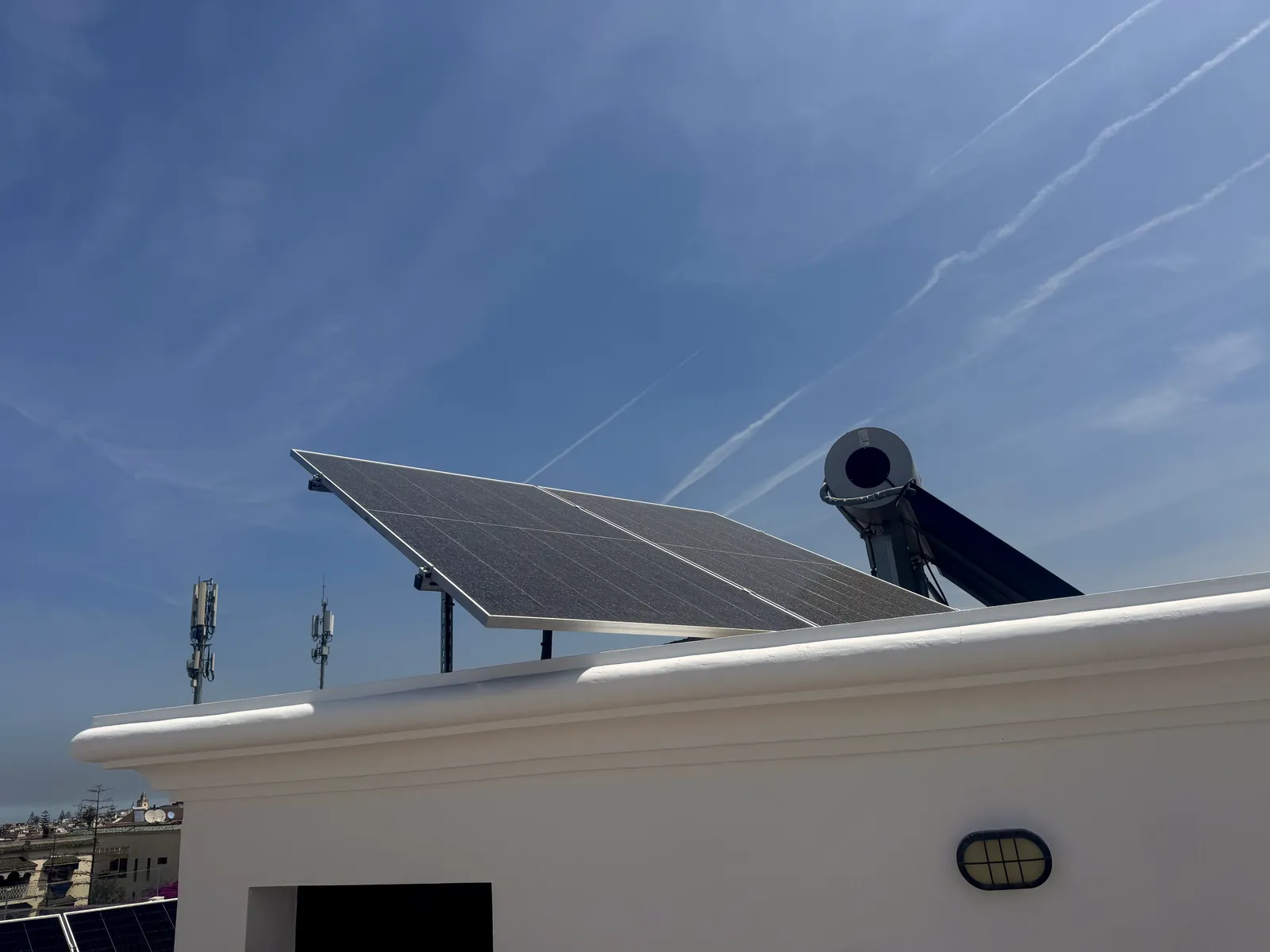
Bifacial modules also capture the light reflected by the roof: on a light-coloured terrace, that's yield gained without extra surface area. These 705 to 720 Wc modules come from a manufacturer that has shipped more than 100 GW worldwide, held to the IEC 61215 and IEC 61730 standards. These are the ones fitted in Casablanca and El Jadida.
- Bifacial 705 – 720 Wc
- 12-year product warranty
- 30-year linear performance warranty (≥ 87.4 %)
Panels — JA Solar DeepBlue
The monocrystalline DeepBlue cell goes after yield rather than surface area — useful when roof space is tight. Same tier of manufacturer, same certification requirement. Installed in Nouaceur.
- High-efficiency monocrystalline
- 12-year product warranty
- 25-year performance warranty
Hybrid inverters — Deye
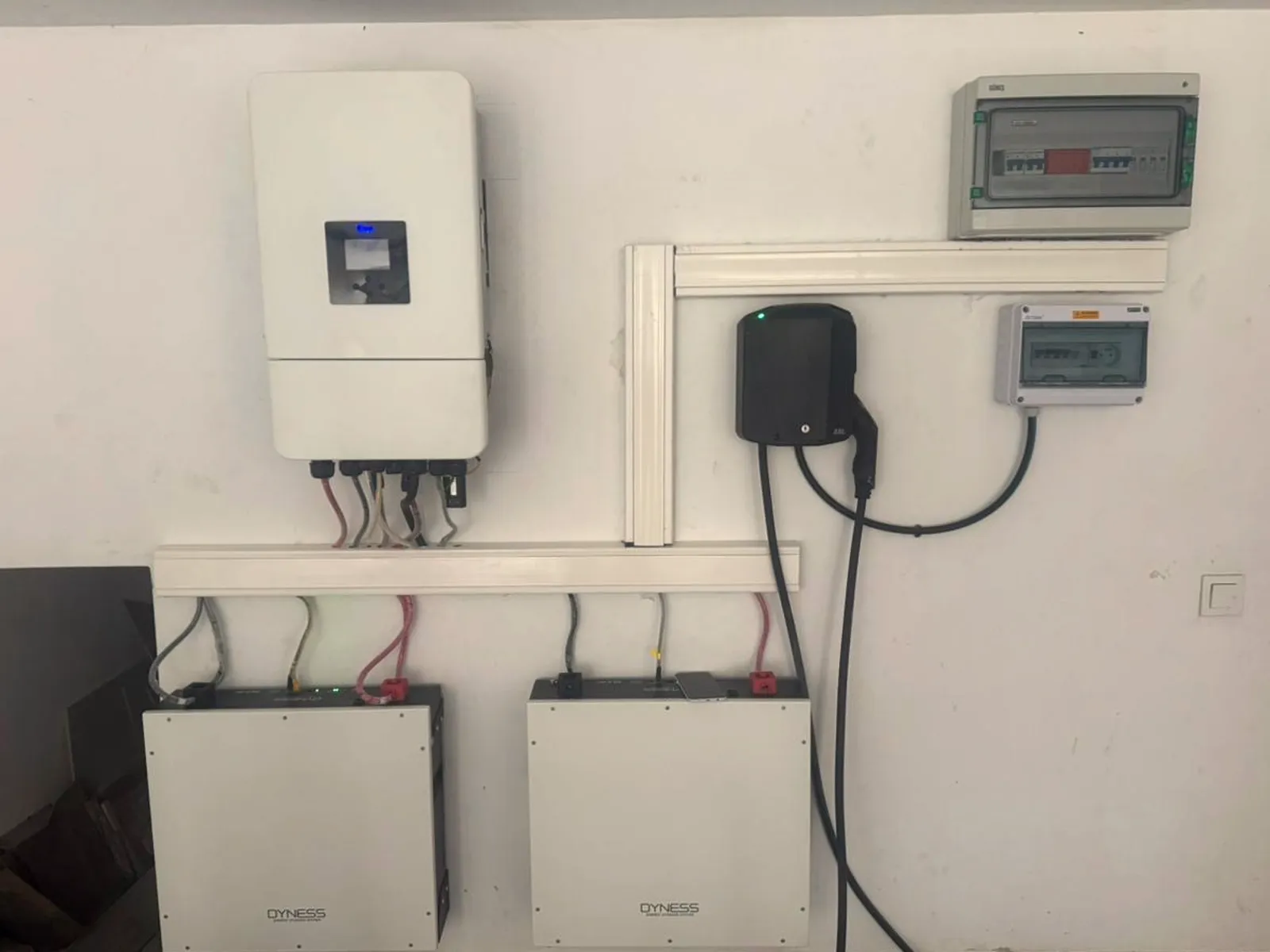
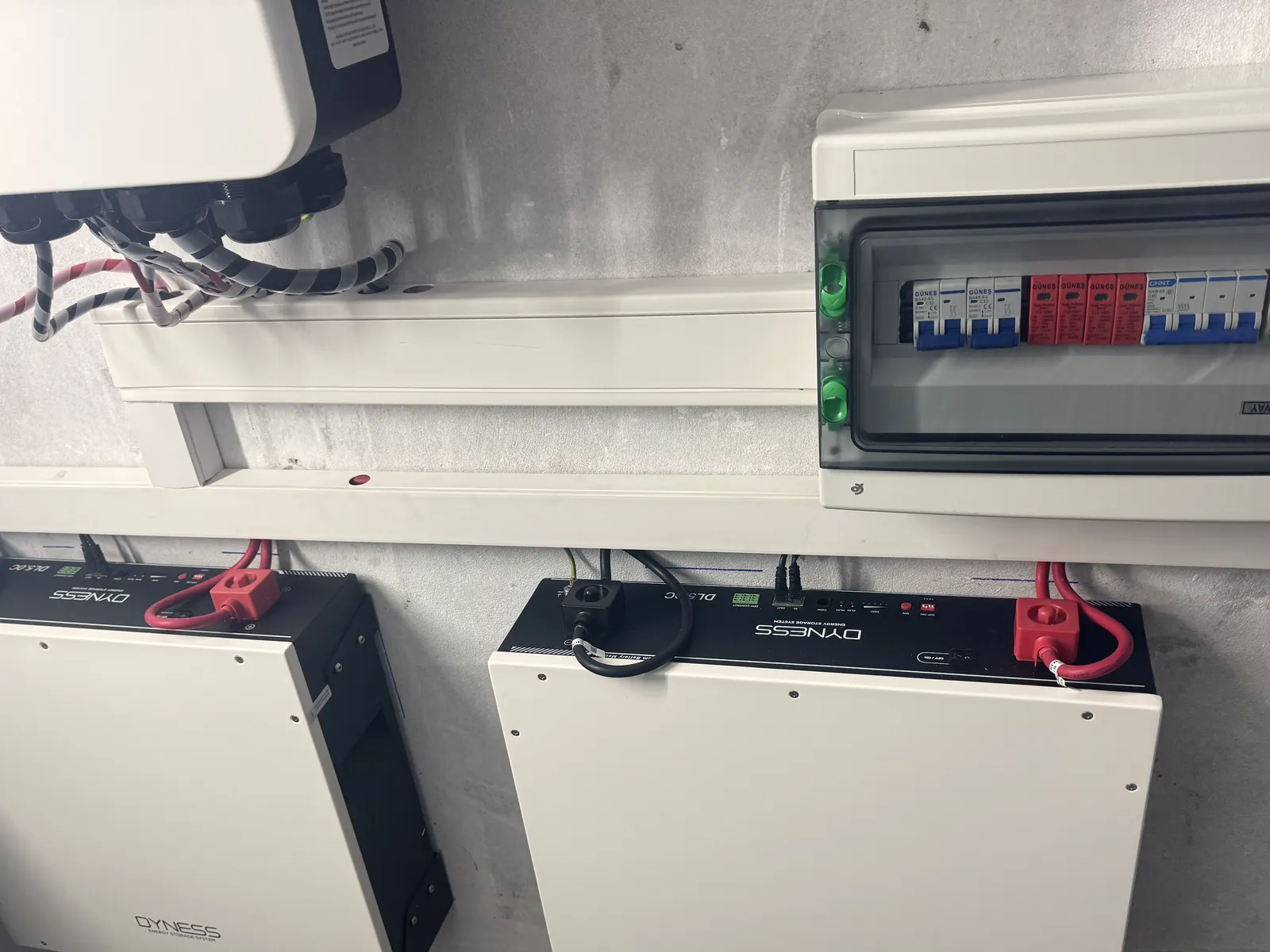
We choose the Deye hybrid for one concrete reason: when the grid drops, it switches to battery within milliseconds — fast enough to keep a computer running. The rest of the time it decides, second by second, whether to draw from the panels, charge the battery or pull from the grid. The SUN-SG05LP1, SG05LP3 and SG01HP3 ranges cover 5 to 30 kW, single-phase as well as three-phase, and talk to the battery BMS over CAN. Compliant with IEC 61727 and VDE-AR-N-4105.
- Single-phase and three-phase, 5 – 30 kW
- Built-in CAN BMS battery management
- 10-year warranty
Grid-tied inverters — Huawei SUN2000
When the study calls for no battery, we go with pure string. The Huawei SUN2000 optimises string by string: a shaded panel no longer drags the whole row down. From residential to commercial rooftops.
- High European efficiency
- Per-string optimisation
- 10-year warranty
Batteries — Dyness DL5.0C
Lithium iron phosphate does not run away thermally the way some other lithium chemistries do: it's the safe choice for home storage. The DL5.0C / DL5.0C PRO modules stack in 5 kWh blocks and natively speak the CAN BMS of the Deye units. Certified CE, IEC 62619, UN38.3.
- LFP chemistry — 6,000+ cycles at 90 % DoD
- Modular: 5 to 15 kWh and beyond
- 10-year warranty
Monitoring — real-time production monitoring
Without measurement, a stated output is just an unverifiable promise. So every roof carries a WiFi/Ethernet dongle providing real-time production monitoring: minute-by-minute production, history, fault alerts. You keep your own personal access via an app; on our side, we watch the whole fleet and step in before the fault ever shows up at your home.
- Production measured continuously
- Automatic alerts — proactive after-sales
- Client access via mobile app
Compare before you choose
What sets our references apart
Two brands per family, laid out side by side so the choice is legible — the finer differences live in each product's manufacturer datasheet.
Photovoltaic panels
| Criterion | Canadian Solar | Jinko |
|---|---|---|
| Model | TOPBiHiKu7 (CS7N-…TB-AG) | Tiger Neo (N-type) |
| Cell | N-type TOPCon cell, bifacial technology | High-efficiency monocrystalline N-type cell |
| Power | Power range 705 – 720 Wc | Power range ≈ 700 – 720 Wc |
| Standards | IEC 61215 and IEC 61730 compliant | IEC 61215 and IEC 61730 compliant |
| Warranty | Garantie produit 12 ans · performance linéaire 30 ans | Garantie produit 12 ans · performance linéaire 30 ans |
Inverters
| Criterion | Huawei (grid-tied) | Deye (hybrid) |
|---|---|---|
| Typical use | No battery (pure string) | With battery (real-time control) |
| Model | SUN2000 (série string) | SUN-…-SG05LP3 / SG05LP1 |
| Strength | Per-string optimisation (multiple MPPT) | Built-in CAN BMS battery management |
| Range / compliance | From residential to commercial rooftops | Single-phase and three-phase, 5 – 30 kW |
| Warranty | Garantie 10 ans | Garantie constructeur 5 à 10 ans (selon site d'installation) |
It's the study of your roof that picks the reference, never the other way round: no battery means string Huawei, with a battery means hybrid Deye.
Why traceability matters
The fear isn't irrational — the answer is verifiable
In 2025, the Moroccan press reported on a case where batches of imported solar panels turned out to underperform: real-world output noticeably below what the technical datasheets and official documents claimed, on volumes destined for public tenders. We are not citing this case against any particular installer — none is named in it — but because it asks exactly the right question before you sign: where does this panel come from, and who can prove it?
What the market has shown
Unbranded references bought on datasheet alone can ship with a real-world yield far below what was claimed — leaving the buyer with no way to prove it after the fact.
What we document, line by line
Every reference on this page is a named tier-1 brand, with its official manufacturer datasheet linked on the product page, its Taqinor contractual warranty and — once installed — verifiable production via real-time production monitoring. Nothing anonymous, nothing untraceable.
Contractual commitments
The warranties, in black and white
A warranty is only worth as much as the file that documents it. Every installation leaves with its own, complete: single-line diagrams, cable cross-section calculations, the list of protections, the commissioning procedure and real-time production monitoring access so you can check the production yourself.
Nothing on this list is decided before your roof. It's the study that dictates the power to fit, whether or not a battery is needed, single-phase or three-phase; these references then do nothing more than answer what the figures asked for.
Free study
Five named brands don't say which one suits your roof — the free study does.
Get my free studyFree · No obligation · Reply within 24–48 h · On WhatsApp